YouTube can't agree with itself on how long your video is
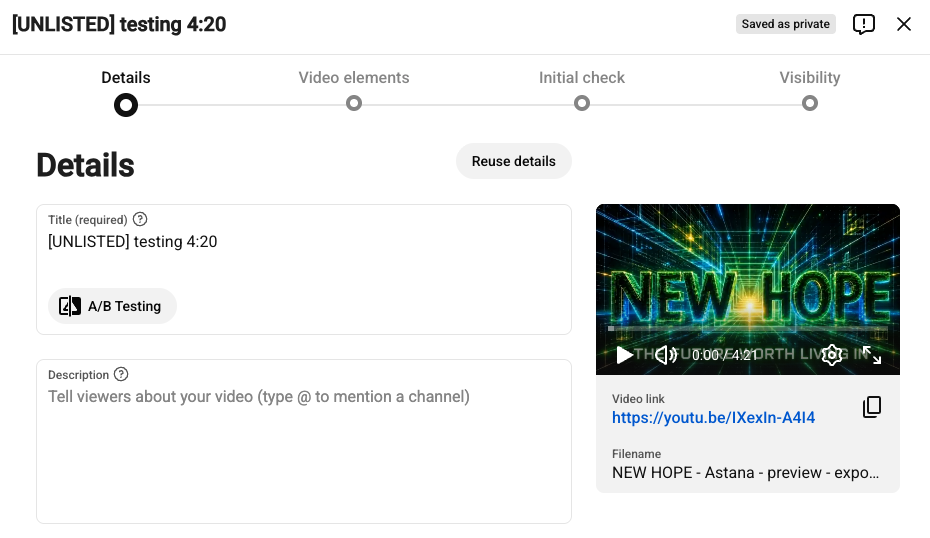
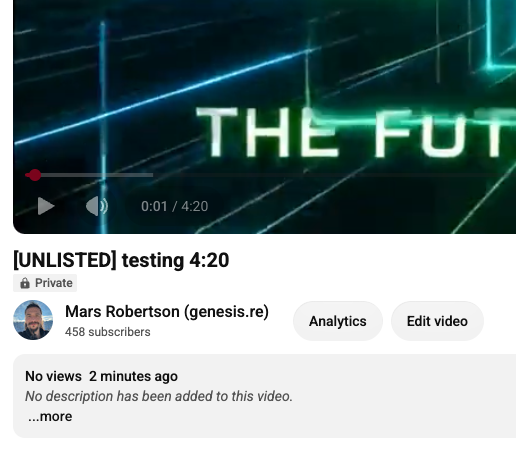
Upload a video. The upload dialog says 4:21. The watch page says 4:20. Encode it shorter and other surfaces say 4:19. There is no length you can encode that every surface displays the same way — and YouTube's own transcoder produces three different durations from one file.
You encode a video aiming for a displayed length of exactly 4:20 — a number people care about, as numbers go. You even expect YouTube to fumble it, so you upload an unlisted test. And it fumbles it in the best possible way: YouTube Studio’s upload dialog shows 4:21, while the public watch page for the same file shows 4:20.
What’s actually happening
The file’s true duration is almost never a round number. AAC audio is packed in 1024-sample frames and encoders pad the final frame, so a “4:20” export typically lands at 260.02–260.05 seconds in the container. Then two YouTube surfaces disagree on what to do with the fraction: one rounds up (260.03 → 4:21), the other truncates (→ 4:20). Neither is wrong about the number. They’re wrong about each other.
The workaround — round one
Encode strictly under the target — the last frame at 4:19;29 (30fps) rather than 4:20;00 — so the surfaces that round up land on 4:20. An absurd sentence to have to write: the way to make a video display as four-twenty is to make it not four minutes twenty seconds long.
Round two: the workaround is also wrong
So the test was run properly: re-encode the real video to end at 4:19;29 — a true duration of 259.966 seconds — and upload. The surfaces that round up now agree on 4:20:
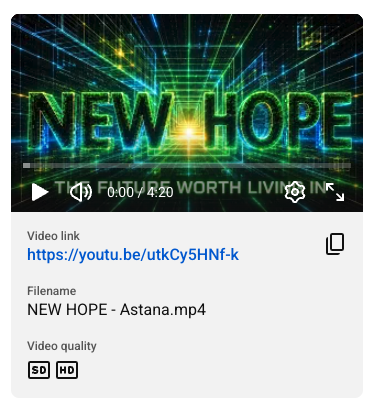
But surfaces that truncate now compute floor(259.966) = 259 seconds — and display 4:19. Going short fixed the round-up surfaces and broke the round-down ones. The two failure modes trade places.
Which closes the trap. To satisfy every surface at once:
- surfaces that round up need the true duration ≤ 260.000
- surfaces that round down need it ≥ 260.000
- so the only universally correct encode is exactly 260.000000 seconds
— which AAC frame arithmetic (1024-sample frames; 260s is not a whole number of them at 44.1 or
48 kHz) makes effectively impossible to author. And even if you authored it, it wouldn’t survive:
pull the actual metadata for this upload and YouTube’s own transcoder reports three different
durations for the same video — 259.966s, 259.981s, and 260.017s across the streams it
generated. YouTube’s encoder lands on both sides of the 260-second line from a single input
file. Which side of the line a given surface displays depends on which stream it consults and
which direction it rounds.
There is no correct way to encode this video. Not “hard to get right” — mathematically closed. The uploader who tests first, finds the bug, and applies the exactly-correct workaround is rewarded with the same bug wearing a different number.
Bonus quirk, free with purchase
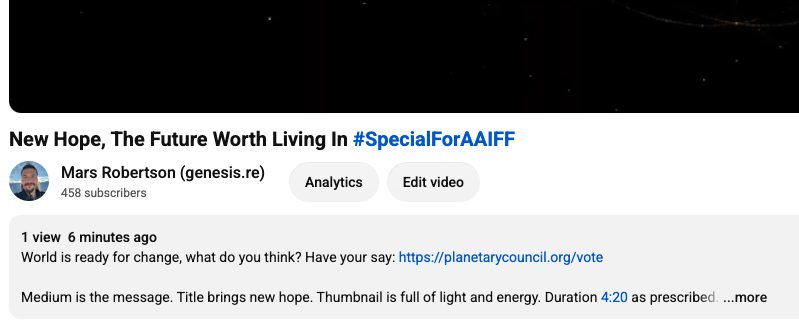
Write “Duration 4:20” in the description — a reasonable thing to note, under the circumstances —
and YouTube auto-linkifies the 4:20 into a clickable seek timestamp: a link that jumps to
the 260th second of a video that is 259.966 seconds long. The sentence about the duration is
hijacked by the duration, and points at a moment that does not exist.
Why it’s a quirk, not a case
The seconds lost are real but tiny, and mostly paid by people chasing round numbers. What earns it a spot is the contradiction: a platform this size showing two different durations for one file — and, on inspection, storing three — because nobody decided, once, platform-wide, how to round half a second. The fix is one line: pick a rounding rule. Any of them. Just once.